







What Are Melatonin Gummies?
Melatonin gummies are chewable dietary supplements formulated with melatonin. They are gelatin-free, soft in texture, and flavored pleasantly to make consumption effortless. Unlike tablets or capsules, which many people forget or avoid, gummies encourage consistent use, which is essential for regulating sleep patterns. The rise of gummies across India and the world is linked to their convenience, ease of use, and pleasant experience—especially for individuals who dislike swallowing tablets or have sensory sensitivities.
The gummies contain melatonin identical to the melatonin naturally produced by the pineal gland. They do not contain sedatives or sleep drugs; instead, they support the body’s hormonal rhythm. Their chewable nature makes them ideal for students, stressed professionals, frequent travellers dealing with jet lag, elderly individuals, and even children with doctor supervision. As sleep disorders increase, gummies offer a simple, enjoyable, and reliable way to support better sleep without the harsh side effects associated with chemical sleeping pills.
Also Read: Melatonin Gummies: A Modern Solution for Better Sleep
The Science Behind Melatonin: How It Works in the Body
Melatonin is a hormone produced by the pineal gland in the brain in response to darkness. It regulates the circadian rhythm—the natural 24-hour cycle that controls sleep, wakefulness, energy levels, and hormonal balance. When night falls, melatonin rises naturally, preparing the body for rest by reducing alertness and slowing down neurological activity. Exposure to morning sunlight decreases melatonin, signaling the body to wake up and shift into daytime mode.
However, the modern world disrupts this natural cycle. Blue light emitted from screens blocks melatonin by up to 50% (Harvard Health, 2020), making it difficult to fall asleep even when tired. Stress activates cortisol, a hormone that counteracts melatonin. Irregular routines confuse the internal clock. For autistic individuals and neurodivergent children, studies show that melatonin production may be naturally lower or delayed, contributing to significant sleep challenges (Wright et al., 2011).
Melatonin supplements help compensate for this imbalance by sending the brain a natural signal to wind down. They do not force the brain into sedation; instead, they reinforce the physiological rhythm. This makes melatonin fundamentally different from sleep medications that chemically induce drowsiness.
Also Read: The Science Behind Melatonin: How It Works in the Body
Types of Melatonin Supplements and Who They Help the Most
Melatonin is available in several forms, each suited to different patterns of sleep disturbance. Immediate-release melatonin is absorbed quickly into the bloodstream, making it ideal for people who struggle mainly with falling asleep. It helps reduce sleep latency—the time it takes to transition from wakefulness to sleep. However, a major drawback of immediate-release melatonin is that its effect fades rapidly, which may cause individuals—especially those with fragmented sleep—to wake up again during the night due to the short duration of action.
Sustained-release or extended-release melatonin dissolves slowly over several hours, ensuring a steady supply throughout the night. This form is extremely valuable for individuals who wake up multiple times, experience nightmares, or suffer from light, fragmented sleep. It mirrors natural melatonin secretion more closely and supports deeper, uninterrupted sleep.
Liquid melatonin is rapidly absorbed and is preferred by individuals who need fast onset. For normal sleepers, liquid melatonin may not be necessary and can sometimes cause grogginess if taken without an actual sleep issue. However, for people with sleep disturbances—such as irregular sleep schedules, delayed sleep onset, or sudden disruptions—liquid melatonin offers fast relief by quickly raising melatonin levels, helping them fall asleep faster when needed.
Melatonin sprays are useful for travellers and those experiencing sudden time-zone changes. Gummies provide the benefits of immediate or sustained release depending on the formulation, combined with unparalleled convenience. For autistic children (under medical guidance), melatonin is one of the most studied supplements for improving sleep onset and reducing night-time awakenings.
Overall, sustained-release melatonin is considered the best option for most individuals with sleep difficulties.
It provides several advantages:
- Longer, more natural sleep support – it mimics the body’s overnight melatonin secretion pattern.
- Reduces night awakenings – ideal for people who can fall asleep but cannot stay asleep.
- Promotes deeper, restorative sleep – helping individuals feel fresher and more energized the next day.
Also Read: Types of Melatonin Supplements and Who They Help the Most
Benefits of Melatonin Gummies
Melatonin gummies offer a wide range of scientifically validated benefits. They help people fall asleep faster by promoting the body’s natural transition into rest. They improve sleep quality by supporting deeper sleep stages and reducing night-time interruptions. Many individuals experience nightmares when stress or anxiety dysregulates the sleep cycle; melatonin stabilises this cycle, reducing the intensity and frequency of such disturbances.
Melatonin also helps regulate irregular sleep schedules, making it valuable for students with erratic routines, shift workers with unnatural timings, and professionals experiencing burnout. Jet lag is significantly reduced because melatonin helps reset the biological clock to new time zones more rapidly. Elderly individuals benefit because natural melatonin production declines with age.
Most importantly, melatonin is non-habit forming. It does not cause dependency, withdrawal, or morning grogginess when taken in appropriate doses. Its pleasant gummy form makes daily use consistent and enjoyable.
Also Read: Benefits of Melatonin Gummies
Who Should Consider Melatonin Gummies?
Melatonin gummies can help individuals whose sleep is disrupted due to lifestyle habits, biological patterns, or environmental sensitivity. People with delayed sleep phase disorder—those who naturally fall asleep very late—benefit greatly from melatonin’s ability to shift the circadian rhythm earlier. Similarly, autistic children and adults often display delayed melatonin peaks or irregular cycles, and melatonin supplementation has been shown to improve total sleep time, reduce bedtime resistance, and shorten sleep onset (Gringras et al., 2017).
Shift workers dealing with unnatural sleep cycles find relief as melatonin helps simulate night-time even during the day. Travellers crossing time zones adjust more comfortably. Adults experiencing insomnia, nightmares, or anxiety-associated sleep disruptions can use melatonin as a safe alternative to sedatives. Seniors often experience diminished melatonin production with advancing age, and supplementation restores a more youthful rhythm. However, pregnant or breastfeeding women, individuals with chronic illnesses, and children should consult a doctor before use.
Also Read: Who Should Consider Melatonin Gummies?
How Much Melatonin Do You Need?
Melatonin dosing varies, but research consistently finds that lower doses are more physiological and effective. Many adults benefit from 3mg, which is considered ideal for gentle regulation without morning grogginess. Those just starting may try 1 mg, but most feel better results with 3 mg due to natural metabolism and lifestyle stressors.
In India, FSSAI regulations permit melatonin supplements up to 10 mg, and higher doses may be beneficial for short-term use under professional guidance—for example, severe insomnia, shift work recovery, jet lag, or significant circadian rhythm disruption. However, science shows that melatonin works best in minimal doses that mimic natural secretion (Zhdanova et al., 2001).
Importantly, after six months of continuous use, the dosage should be reduced, allowing the body to adjust to a healthier routine while still receiving mild support if required. High doses are not superior and may cause vivid dreams or morning heaviness. Melatonin is a signalling hormone—not a sedative—and works best when taken in a balanced, regulated quantity.
Also Read: How Much Melatonin Do You Need?
Are Melatonin Gummies Safe?
Melatonin is considered extremely safe, with thousands of studies supporting its use for sleep regulation across children, adults, and seniors. Its half-life—the time the body takes to reduce melatonin concentration by half—is around 30–60 minutes for immediate-release forms. This means melatonin is naturally cleared quickly without building dependency. Sustained-release forms extend support for up to 8 hours by slowing absorption, not by increasing dosage.
Clinical trials show melatonin improves sleep onset, total sleep duration, and sleep quality in individuals with insomnia, jet lag, circadian rhythm disorders, and autism spectrum disorder (Rossignol & Frye, 2011). A major study published in The Journal of Sleep Research demonstrated that sustained-release melatonin significantly improved restful sleep and morning alertness.
Because melatonin works with natural sleep physiology rather than against it, the chances of side effects remain extremely low. Mild effects like vivid dreams or slight morning heaviness typically occur only when doses are too high.
Also Read: Are Melatonin Gummies Safe?
What Are Sustained-Release Melatonin Gummies?
Sustained-release melatonin gummies are designed with controlled-release technology that allows melatonin to dissolve gradually over 6–7 hours. This mimics the body’s natural nighttime melatonin curve, preventing abrupt drops that lead to night-time awakenings. These gummies help maintain continuous, restful sleep throughout the night, especially for those who fall asleep easily but cannot stay asleep.
High-quality sustained-release gummies are sugar-free, making them suitable for long-term use. They offer a gentle release without spikes or crashes, helping individuals with insomnia, nightmares, anxiety-linked sleep disturbances, and sensory-related sleep issues. For autistic individuals, sustained-release melatonin is particularly helpful for improving total sleep duration and reducing early morning awakenings—a benefit supported by multiple clinical trials.
Also Read: Sustained Release Melatonin Gummies: The Game-Changer for Deep Sleep
How to Take Melatonin Gummies Correctly for Best Results
Melatonin should ideally be taken 30–60 minutes before bedtime to allow its effects to align with the body’s natural wind-down process. The wind-down process is the body’s gradual shift from alertness to relaxation—heart rate slows, thoughts settle, and the brain begins preparing for sleep. After taking melatonin, reducing screen exposure is critical because blue light directly suppresses melatonin activity. A calm, dark, cool room amplifies melatonin’s effectiveness and helps the body shift into deep rest. Consistency is essential—melatonin works best when taken regularly.
Melatonin vs Other Sleep Aids
Melatonin differs from sleeping pills because it does not force the brain into sleep. Chemical sleep aids cause heaviness, confusion, dry mouth, and dependency. They may help you sleep, but they do not correct the underlying problem. Herbal teas like chamomile or lavender can help relax the body but cannot regulate the biological clock.
Melatonin works naturally with your internal rhythm. It gently signals the body that it is time to rest, restores sleep timing, and stabilizes night patterns. This makes it a better long-term solution for insomnia, nightmares, anxiety-related sleep issues, and sensory-related disturbances experienced by neurodivergent individuals. Among all forms, sustained-release melatonin is considered the most effective because it stays active throughout the night, reduces frequent awakenings, mimics natural melatonin secretion, and supports deeper, more restorative sleep without next-day grogginess.
What to Look for When Buying Melatonin Gummies
When choosing melatonin gummies, clean and simple formulations should be a priority. Sugar-free are preferred for regular use. A 3 mg dose is appropriate for all, sustained-release options are best for people who wake up many times at night. Look for FSSAI-approved products with transparent labels and third-party testing. High-quality melatonin gummies avoid unnecessary additives, artificial colours, and artificial flavours, ensuring safer long-term use.
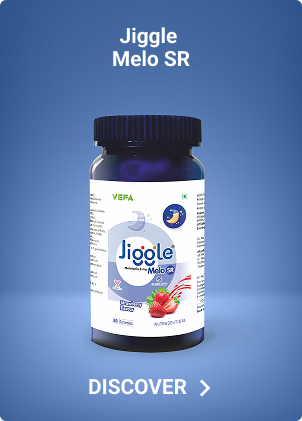
Introducing Jiggle Melo SR – India’s First Sustained-Release Melatonin Gummy
Jiggle Melo SR by Vefa Lifesciences is redefining sleep wellness in India with its breakthrough sustained-release melatonin technology. Unlike regular melatonin gummies that release the entire dose at once, Jiggle Melo SR is scientifically engineered to release melatonin gradually throughout the night. This ensures faster sleep onset, steady deep-sleep maintenance, and no mid-night awakenings—making it a powerful yet gentle solution for children, young adults, and working professionals who struggle with disrupted sleep cycles.
Made with 3 mg of melatonin, no added sugar, and a delicious natural strawberry flavour, Jiggle Melo SR is crafted to support healthy sleep without causing dependency, grogginess, or morning fatigue. It is especially helpful for people dealing with anxiety-related sleep disturbances, sensory overload, ADHD-related sleep issues, autism-spectrum sleep interruptions, jet lag, and irregular work schedules. With its safe, non-habit-forming formulation, it is suitable for regular use and helps restore the body’s natural circadian rhythm gradually and effectively.
Adding to its credibility, Jiggle Melo SR has been honoured with the CMPL Disruptors Award for Innovation in the Health and Wellness category.
Also Read: Do Sustained Release Melatonin Gummies Really Help You Sleep Better?
Conclusion
Sleep is not a luxury , it is a biological necessity that shapes every aspect of mental, emotional, and physical well-being. As modern lifestyles continue to shift toward late nights, digital overload, academic/work pressure, and irregular routines, millions across India are experiencing disturbed sleep patterns. This widespread sleep disruption affects children, adults, shift workers, travellers, and individuals on the autism spectrum, each facing unique challenges that require safe, effective, and science-driven solutions.
Melatonin gummies have emerged as one of the most reliable and gentle sleep-support systems available today. Their appeal lies in the combination of physiological accuracy, clean hormone signalling, and simple usability. Unlike sedatives that push the brain into an artificial sleep cycle, melatonin works with the body—reinforcing the natural circadian rhythm, reducing alertness gradually, and encouraging deep restorative rest. Over the past decade, clinical research has repeatedly shown that melatonin helps regulate sleep onset, improves total sleep time, lowers night-time awakenings, and reduces anxiety-linked disturbances. These benefits extend further for individuals with neurodevelopmental differences, especially autism, where delayed melatonin secretion is a common biological pattern.
Among all formats, gummies have revolutionised acceptance and consistency. Their pleasant taste, chewable texture, and easy portability make them ideal for children, teens, stressed adults, and elderly individuals who dislike swallowing tablets. The rise in demand reflects a growing understanding: sleep support must be simple, enjoyable, and sustainable. Melatonin gummies fulfil this exact need.
Yet, not all melatonin supplements are created equal. Immediate-release melatonin helps people fall asleep faster but may not prevent midnight awakenings. This is where sustained-release technology is a breakthrough. Sustained-release melatonin aligns closely with the body’s natural secretion curve, releasing melatonin slowly over 6–7 hours, preventing early awakenings, stabilising deep sleep, and maintaining a peaceful rest cycle.
This innovation reaches its peak in Jiggle Melo SR by Vefa Lifesciences, India’s first sustained-release melatonin gummy. With its 3 mg optimal dose, sustained-release matrix, and zero added sugar, Jiggle Melo SR delivers science-backed sleep regulation in the most convenient and enjoyable form. It supports individuals experiencing insomnia, nightmares, sensory-driven sleep disturbances, work-related stress, and jet lag. For autistic children and adults, Jiggle Melo SR provides one of the most reliable non-habit-forming sleep aids, helping improve bedtime transition, total sleep duration, and early morning wakefulness.
Importantly, Jiggle Melo SR is designed with safety at its core. Melatonin is non-addictive, gentle on the nervous system, and well-tolerated even with long-term use. Its controlled release prevents hormonal spikes and ensures smooth nighttime support without morning grogginess. This makes it ideal for students, corporate professionals, medical workers, pilots, senior citizens, and anyone navigating modern life’s sleep challenges.
As India becomes more aware of sleep’s role in immunity, mental health, child development, emotional balance, and productivity, the demand for trustworthy, research-backed solutions will continue to rise. Melatonin gummies—especially sustained-release formulations—represent the future of natural sleep support: easy, safe, effective, and scientifically meaningful.
In conclusion, sleep problems do not have to be a lifelong struggle. With the right understanding, correct dosing, and high-quality products like Jiggle Melo SR, individuals and families can reclaim the deep, refreshing sleep they deserve. Better sleep is not just the end of the day—it is the beginning of healthier mornings, balanced minds, happier moods, and stronger lives.
Frequently Asked Questions (FAQs)
Q1. Is melatonin addictive?
No. Melatonin is completely non-addictive and non-habit forming because it works with your body’s natural sleep cycle rather than forcing sedation.
Q2. Can I take melatonin every night?
Yes, adults can take melatonin every night in the correct dosage. It is safe for long-term use when taken responsibly and paired with proper sleep hygiene.
Q3. How quickly do melatonin gummies work?
Most people begin to feel the effects within 30–60 minutes after consumption, as melatonin levels start rising in the bloodstream during this period.
Q4. Can teenagers take melatonin gummies?
Teenagers should only take melatonin under medical supervision since their hormonal cycles and sleep patterns are still developing.
Q5. What should I do if melatonin makes me feel groggy the next day?
Grogginess usually means the dosage is too high. Reducing the dose or switching to a sustained-release version often solves the problem.
Q6. Can I take melatonin at 3 AM if I suddenly can’t sleep?
No, because taking melatonin too late at night can shift your circadian rhythm and may cause daytime sleepiness or confusion the next day.
Q7. Is melatonin safe to take with other supplements?
Generally yes, but it should not be taken with Kidney and liver Issues. If you are on prescription medication, consult a doctor for safety.
Q8. Does melatonin help with anxiety?
Melatonin does not treat anxiety directly, but it can reduce anxiety-related sleep disturbances by calming the mind and supporting sleep onset.
Q9. Can melatonin help travellers with jet lag?
Yes. Melatonin is one of the most effective natural remedies for jet lag because it helps reset the body’s internal clock.
Q10. Is melatonin safe for senior citizens?
Yes, melatonin is safe for older adults when taken in recommended doses. Since melatonin production declines with age, seniors often benefit the most from supplementation.